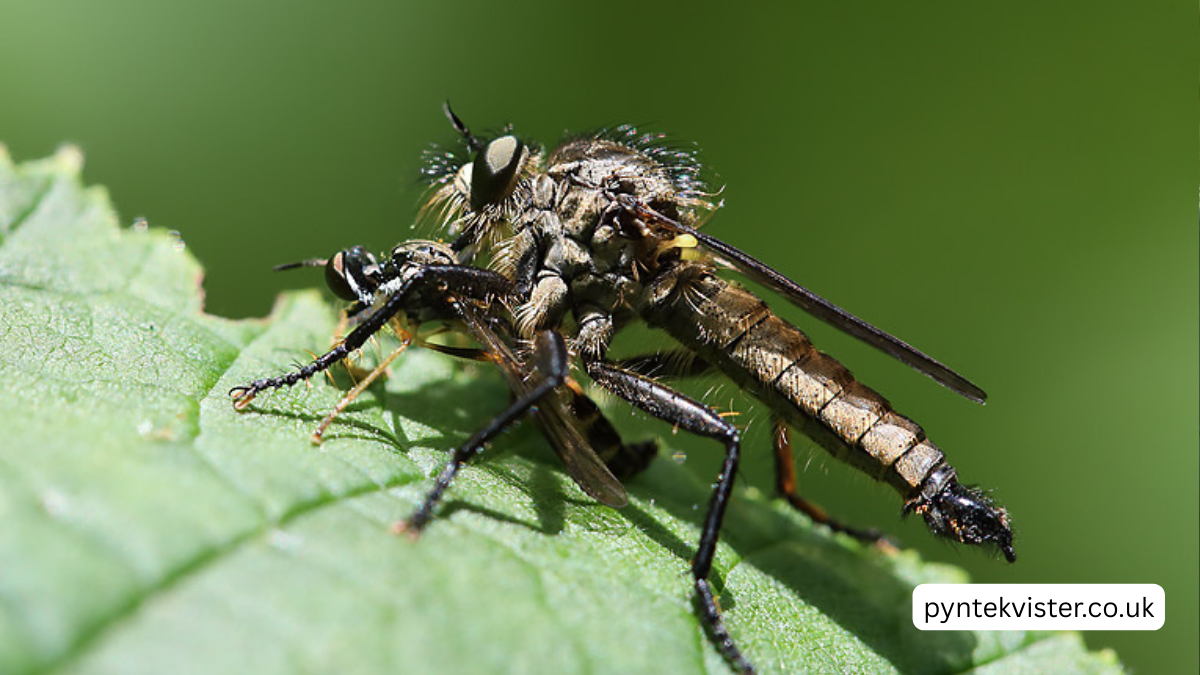

Among the countless insects shaping ecosystems around the world, few are as fascinating—or as misunderstood—as the raubfliege. Often called a robber fly in English, this aerial predator combines speed, precision, and evolutionary efficiency in ways that rival larger animal hunters. Despite their intimidating appearance, these insects play a vital ecological role, helping regulate pest populations and maintain natural balance across diverse habitats.
This comprehensive guide explores biology, behavior, ecology, identification, myths, and scientific importance surrounding the raubfliege. Designed as an authoritative resource, it delivers deep yet accessible insight for naturalists, students, gardeners, photographers, and anyone curious about one of nature’s most skilled insect predators.
What Is a Raubfliege?
The term refers to insects belonging to the family Asilidae, a large group of predatory flies found worldwide. Unlike common houseflies, these insects actively hunt other insects midair, capturing prey with remarkable agility and precision.
A typical raubfliege features a strong thorax, long spiny legs, and a distinctive bristled “beard” called a mystax that protects its head during struggles with prey. Their appearance often causes confusion with bees or wasps, a form of protective mimicry that discourages predators.
Taxonomy and Scientific Classification
Robber flies belong to the order Diptera, meaning true flies with one pair of wings. Within this order, the Asilidae family includes thousands of species adapted to different climates and ecosystems across continents.
Taxonomists classify species based on wing venation, body structure, and mouthpart morphology. Scientific classification helps researchers understand evolutionary relationships and ecological specialization among various raubfliege species.
Evolutionary Origins and Adaptation
Fossil evidence suggests robber flies have existed for tens of millions of years, evolving alongside flowering plants and expanding insect diversity. Their predatory lifestyle emerged as a successful ecological strategy during periods of rapid insect radiation.
Over time, adaptations such as advanced vision, rapid flight acceleration, and venomous saliva allowed the raubfliege to dominate aerial hunting niches. Evolution refined these traits into one of the insect world’s most efficient predation systems.
Physical Characteristics and Identification
Most species range from small, delicate forms to large, intimidating insects exceeding three centimeters in length. Their elongated abdomen and powerful legs give them a streamlined hunting profile.
Large compound eyes enable exceptional motion detection, allowing a raubfliege to track moving targets with remarkable accuracy. Observers often notice their upright resting posture on branches or rocks while scanning for prey.
The Mystax: A Unique Protective Feature
The dense bristles surrounding the mouthparts serve more than an aesthetic function. This structure protects sensitive facial regions when prey attempts to fight back using stingers or mandibles.
Scientists believe the mystax also assists in sensory detection, helping the raubfliege evaluate movement and airflow during hunting. This small anatomical feature demonstrates how evolution solves multiple challenges through single adaptations.
Hunting Behavior and Strategy
Robber flies hunt using a sit-and-wait ambush technique. They perch in sunny locations, watching for passing insects before launching rapid aerial attacks.
Once captured, a raubfliege injects digestive enzymes that immobilize prey and liquefy internal tissues. This process allows efficient nutrient extraction, minimizing energy expenditure during feeding.
Flight Mechanics and Aerodynamics
Flight performance defines the success of these predators. Their wings generate powerful thrust while enabling sudden directional changes during pursuit.
Research shows that a raubfliege can accelerate faster than many similarly sized insects. This agility allows successful interception even against fast-moving prey like dragonflies or bees.
Vision and Sensory Intelligence
Compound eyes provide nearly panoramic vision, reducing blind spots during flight. Neural processing prioritizes motion detection, enabling rapid response times measured in milliseconds.
Unlike insects relying primarily on smell, the raubfliege depends heavily on visual cues. This specialization shapes hunting behavior and influences habitat selection.
Diet and Prey Selection
Robber flies consume a wide variety of insects, including flies, beetles, butterflies, and occasionally wasps. Larger species may even capture insects nearly equal to their own size.
Diet diversity allows the raubfliege to thrive in multiple ecosystems. Opportunistic feeding ensures adaptability when prey availability fluctuates seasonally.
Ecological Role in Pest Control
As natural predators, robber flies help regulate insect populations that might otherwise become agricultural pests. Their presence often signals a healthy ecosystem with balanced trophic relationships.
Gardeners and farmers increasingly recognize the raubfliege as a beneficial insect. By reducing pest numbers naturally, they contribute to sustainable agriculture without chemical intervention.
Habitat Preferences and Distribution
These flies inhabit grasslands, forests, deserts, and coastal regions worldwide. Open sunny environments with clear flight paths are particularly favorable hunting grounds.
The raubfliege prefers habitats offering elevated perches such as stems, stones, or fences. These vantage points maximize visibility and hunting success.
Life Cycle and Development
The life cycle begins when females deposit eggs in soil, plant material, or decaying wood. Larvae develop as predators themselves, feeding on other insects or organic matter underground.
Pupation occurs within protected environments before adults emerge fully equipped for aerial hunting. The raubfliege lifecycle reflects a consistent predatory theme across all stages.
Seasonal Activity Patterns
Most species are active during warmer months when insect prey is abundant. Activity peaks during sunny periods when visibility and flight conditions are optimal.
Temperature strongly influences metabolism and hunting frequency. A raubfliege becomes noticeably more active under bright sunlight compared to cooler or cloudy conditions.
Interaction With Humans
Although intimidating in appearance, robber flies rarely pose danger to humans. Bites occur only when handled or threatened directly.
Observing a raubfliege in nature can be rewarding for insect enthusiasts and photographers. Their predictable perching behavior makes them surprisingly approachable subjects for study.
Misconceptions and Common Myths
Many people mistake robber flies for aggressive stinging insects. In reality, they do not seek human interaction and focus almost exclusively on insect prey.
Another misconception is that the raubfliege harms pollinators excessively. While they occasionally capture bees, ecological balance ensures their predation supports overall biodiversity rather than harming ecosystems.
Comparing Robber Flies With Similar Insects
Accurate identification helps distinguish robber flies from lookalike species such as horseflies or hoverflies. Each group occupies different ecological roles despite visual similarities.
| Feature | Raubfliege | Hoverfly | Horsefly |
|---|---|---|---|
| Behavior | Predatory hunter | Pollinator | Blood-feeding female |
| Mouthparts | Piercing predator | Nectar-feeding | Cutting/sponging |
| Flight Style | Rapid ambush | Hovering | Direct pursuit |
| Human Interaction | Rarely bites | Harmless | Painful bite |
| Ecological Role | Pest control | Pollination | Parasite |
Understanding these differences prevents unnecessary fear and promotes appreciation for beneficial insects.
Role in Scientific Research
Scientists study robber flies to understand predator-prey dynamics, flight biomechanics, and neural processing. Their visual tracking systems inspire robotics and drone navigation research.
The raubfliege provides insight into evolutionary optimization, showing how biological systems achieve efficiency through specialization rather than complexity.
Photography and Observation Tips
Early morning and late afternoon provide ideal lighting for observing these insects. Watching perches near open trails often yields sightings.
Patience is essential because a raubfliege frequently returns to the same resting spot after hunting. Observers who remain still can witness repeated flight launches.
Conservation and Environmental Indicators
Healthy robber fly populations often indicate intact ecosystems with diverse insect communities. Habitat loss and pesticide overuse can reduce their numbers.
Protecting native vegetation supports the raubfliege indirectly by maintaining prey populations and suitable breeding grounds.
Climate Change and Future Challenges
Shifting temperatures influence insect distribution worldwide. Some species expand ranges while others face habitat disruption.
Researchers monitor the raubfliege as part of broader ecological studies examining how predators adapt to environmental change.
Cultural Perception and Natural Fascination
Across cultures, predatory insects evoke both fear and admiration. Robber flies embody nature’s efficiency, demonstrating survival through precision rather than size.
Entomologist observations often emphasize respect rather than fear. As one researcher noted, “Predators reveal the true complexity of ecosystems because they depend on everything beneath them.”
Educational Value and Citizen Science
Citizen science projects increasingly encourage public reporting of insect sightings. Observations help scientists track distribution patterns and biodiversity changes.
Learning about the raubfliege fosters ecological awareness, transforming casual curiosity into meaningful environmental engagement.
Gardening and Encouraging Beneficial Predators
Creating insect-friendly gardens with native plants attracts diverse prey species, indirectly supporting robber flies. Avoiding broad-spectrum pesticides preserves natural predator populations.
Garden ecosystems benefit when the raubfliege becomes part of the natural food web, reducing reliance on artificial pest control methods.
Why Robber Flies Matter More Than We Think
Predatory insects often receive less attention than pollinators, yet they are equally essential to ecological stability. They prevent population explosions that could destabilize food chains.
The raubfliege exemplifies how even small organisms exert large ecological influence. Their presence reinforces the interconnected nature of biodiversity.
Conclusion
The robber fly stands as one of nature’s most efficient aerial predators, combining speed, intelligence, and evolutionary refinement into a single insect. Far from being dangerous nuisances, these hunters contribute significantly to ecological balance and sustainable pest control.
Understanding the raubfliege changes perception. What first appears intimidating becomes an example of biological precision and environmental harmony. As awareness grows, appreciation for these remarkable insects continues to expand among scientists and nature enthusiasts alike.
Frequently Asked Questions
What is a raubfliege?
A raubfliege is a predatory fly from the Asilidae family known for catching other insects midair using speed, strong legs, and specialized mouthparts.
Are raubfliege dangerous to humans?
The raubfliege rarely bites humans and typically only does so if handled, making it generally harmless in natural environments.
Where can you find a raubfliege?
A raubfliege lives worldwide in sunny habitats such as grasslands, forest edges, deserts, and gardens where insect prey is abundant.
What does a raubfliege eat?
The raubfliege feeds on flies, beetles, butterflies, and other insects, helping control pest populations naturally.
Why is the raubfliege important for ecosystems?
The raubfliege regulates insect populations, supports ecological balance, and acts as a natural pest-control agent within diverse habitats.
